Epidaurus exists beyond the visible.
Its power is not architectural dominance, nor historical scale, but precision — a refinement so exact that it alters the way one perceives space itself. Here, nothing is excessive. Every element serves balance.
The theatre is its most renowned expression, yet it is only the beginning. What defines Epidaurus is not the structure, but the intelligence behind it: an understanding that harmony is not created through volume, but through alignment. Sound travels without force. Silence holds weight. Distance dissolves.
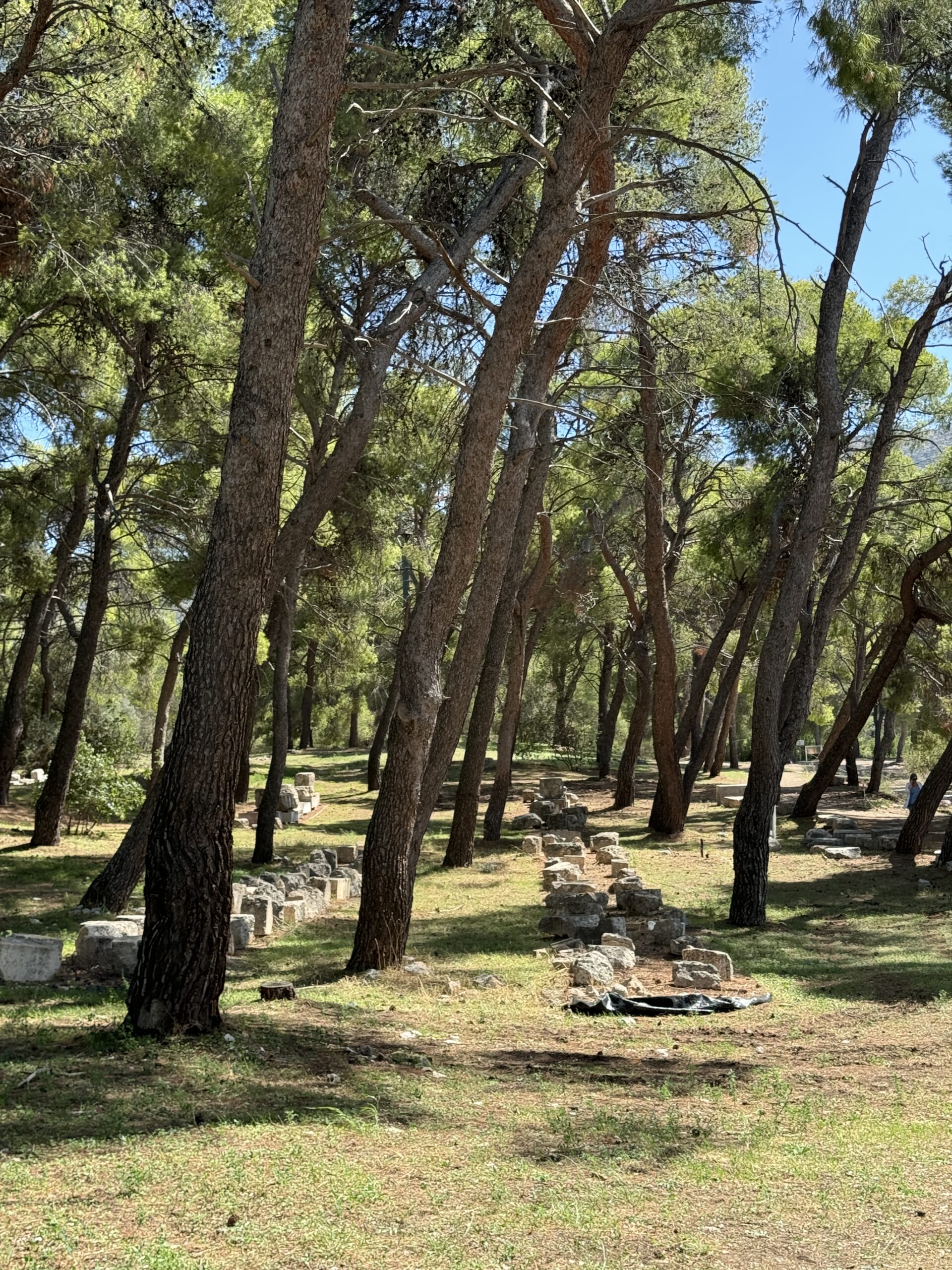
To stand within Epidaurus is to become aware of oneself as part of a larger equation. The landscape does not frame the monument; it completes it. Hills, wind, stone, and human presence exist in dialogue — each aware of the other.
This is why Epidaurus resists haste.
It does not reward quick movement or surface attention. It asks for stillness. For patience. For a willingness to listen before understanding. The experience unfolds inwardly, not outwardly.
Historically associated with healing, Epidaurus was never about cure alone, but about restoration. A return to proportion — between body and mind, individual and environment. That philosophy remains intact. Even today, the site carries a quiet authority that does not impose, but steadies.
At GRECIAQUÍ, Epidaurus is approached as a moment of recalibration.
Not an excursion, but a pause within the journey. Time is softened. Space is respected. The visit is designed to preserve the site’s natural tempo, allowing meaning to emerge without direction.
Epidaurus does not speak loudly.
Yet those who truly listen leave changed — not through revelation, but through clarity.