Silence is also a place.
For centuries, silence was never an absence.
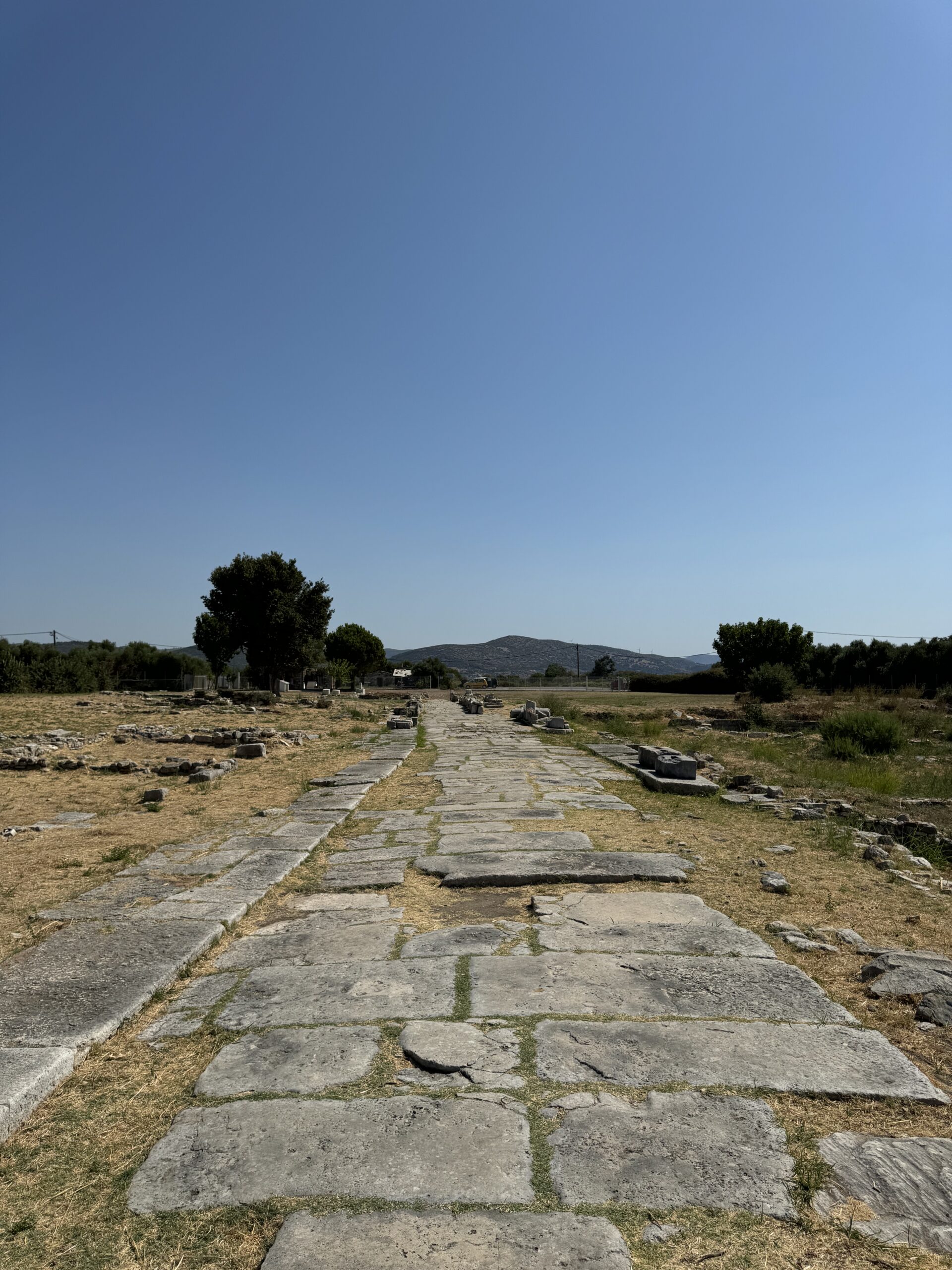
It was a condition for understanding. In Greece, silence does not oppose life; it orders it. It lives in stone, in the distance between columns, in the time that separates one gesture from the next.
Today, travel is often mistaken for accumulation — of experiences, images, constant movement. Yet the journeys that endure are not the most intense, but the most contained. Those where the environment does not demand attention, but receives it.
Greece still offers this kind of space.
Not in the obvious postcard, but in the intervals: an unhurried morning, a dirt path, a shadow that lingers longer than expected. Silence here is not emptiness; it is structure. It allows each element to find its place.
In sites such as Delphi, Epidaurus, or certain islands beyond habitual rhythms, silence is not decorative. It is foundational. It is not imposed; it is discovered. And once present, it alters the way one inhabits time. The body slows. The gaze sharpens. Time ceases to fragment.
To travel through silence does not mean renouncing beauty.
It means allowing beauty not to compete with noise. Not to perform. To be inhabited without urgency.
At GRECIAQUÍ, silence is understood as part of travel design. It is not scheduled as an activity, but protected as a value. Rhythm is considered. Transitions are softened. Saturation is avoided. Space is left for the traveler to arrive inwardly, without being pushed.
Because true luxury today is not access to more.
It is the ability to remain.
To listen.
To not have to respond immediately.
Some places are visited to be seen.
Others, like silence in Greece,
are discovered only when we stop searching.