Delphi was never conceived as a place of easy answers.
Those who journeyed here were not searching for reassurance, but for clarity. The oracle did not predict the future; it forced a deeper examination of the present.
For centuries, rulers, travelers, and pilgrims ascended this rugged landscape not to be told what to do, but to understand what they were truly asking. Delphi did not offer conclusions. It removed noise. It stripped away excess until only the essential remained.
The setting reinforces this intention.
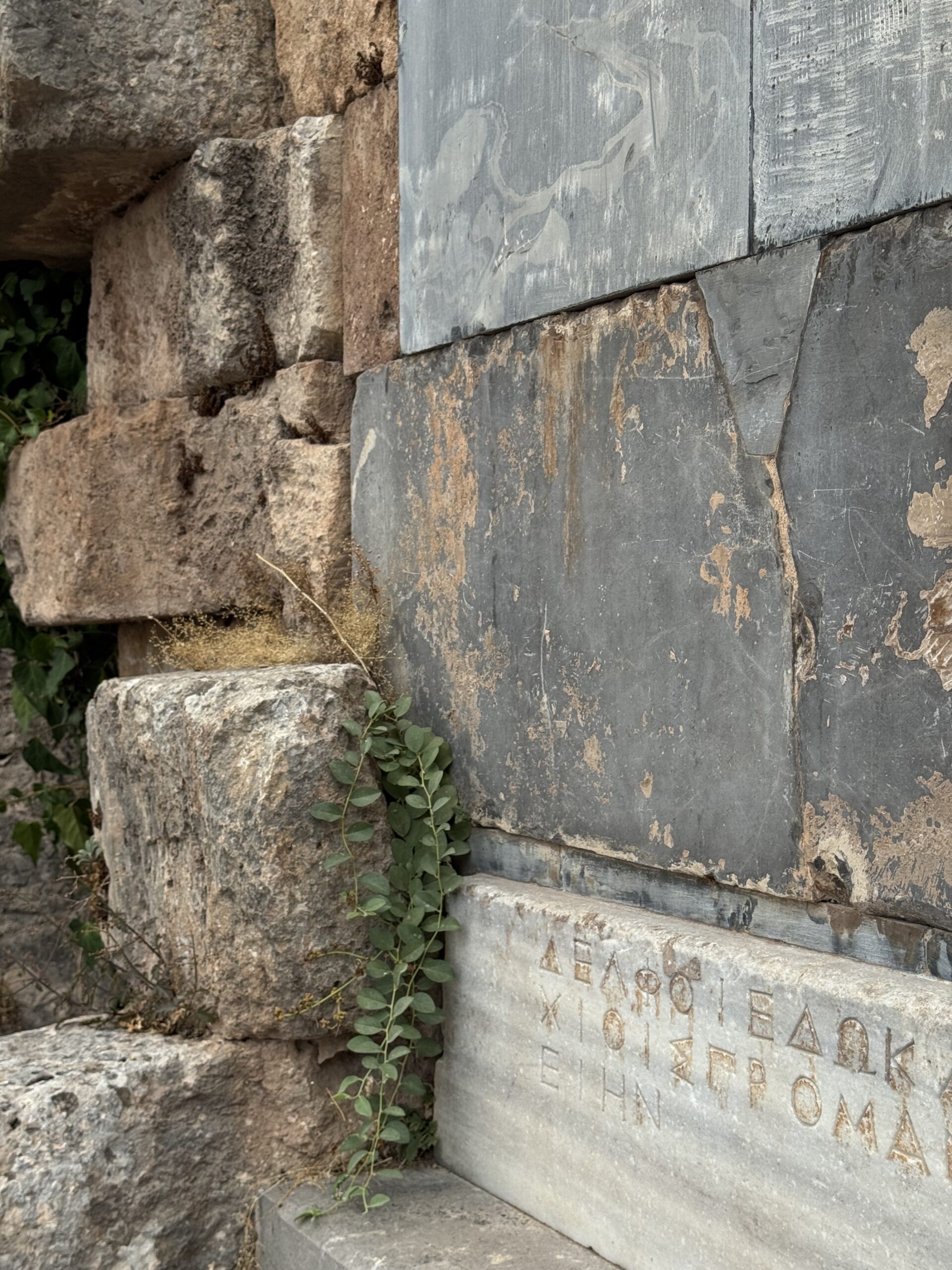
The mountain does not shelter. The stone does not decorate. The emptiness does not comfort. Everything in Delphi directs inward. There is no spectacle here, no distraction to soften the experience. Only containment. Each step narrows perception and demands a more honest form of attention.
The most famous inscription — know thyself — was never a promise of revelation. It was a warning. Before moving forward, one had to stop. Before deciding, one had to listen. Progress was not possible without lucidity.
Reaching Delphi was never impulsive.
It was a consequence. The journey prepared the traveler long before arrival. One reached Delphi only when the question already existed, even if it had not yet taken shape. Delphi did not create doubt; it organized it.
For this reason, encountering Delphi today should not be understood as adding another stop to an itinerary. It is the acceptance of a pause that unsettles. A silence that does not distract. A moment in which the journey ceases to be external and becomes deliberately inward.
At GRECIAQUÍ, Delphi is never approached as a monument to be shown. It is reached when the journey allows it. When the rhythm is ready. When intention has matured enough to sustain the experience without reducing it to spectacle.
Delphi marks neither a beginning nor an ending.
It marks a turning point.
Some places transform the route.
Delphi does not change the path itself —
it changes the meaning with which the journey continues.