By: GRECIAQUÍ | Private Office of Experiences
Field repérage log and firsthand ethnographic research.
Introduction: The philosophy of permanent matter
In the contemporary mass-tourism market, the dominant trend is to consume landscapes epidermically and at an accelerated pace. At GRECIAQUÍ, under a strict curation philosophy inspired by Stoic order and the pursuit of Eudaimonia, we understand that a territory is not merely visited it is audited, distilled, and comprehended through its primary elements. The true transformative journey strips the destination of its commercial wrapping to confront the observer with the earth's material permanence.
This volume gathers the findings of our field exploration across the central axis of Crete, a territory where geology and human agency have coexisted in a symmetrical dialogue for millennia. Through a methodology of direct, firsthand repérage, we delve into the three states of matter that define the island’s identity: the malleability of clay in the low hills of Margarites, the mineral sovereignty of limestone on the peaks of the Psiloritis Massif, and the technological projection of the infrastructures shaping the deep subsoil.
The result is a cartography of proprietary travel insights, tailored exclusively for those seeking legitimate disconnection, safeguarded by the highest standards of logistics and corporate risk management.
Chapter I: The malleability of the earth (Margarites and the Minoan seal)
The Geography of Clay and Descent Logistics
Accessing the village of Margarites, nestled in the northern foothills of Mount Ida, demands precise vehicular handling. The road, characterized by sharp curves of decreasing radius and inclines ranging between 8% and 12%, underwent a rigorous surface audit by our team.
The pavement exhibits an optimal friction coefficient for high-tonnage luxury private transport vehicles, ensuring a smooth transit free from vibrations that could disrupt the passengers' thermal and biological comfort. Our approach was executed mid-morning, leveraging an oblique solar radiation window that mitigates visual fatigue and allows for an appreciation of the landscape’s transition: the limestone of the peaks begins to yield to clay-heavy soils of reddish and ochre hues a geological indicator of the basin’s water and mineral wealth.
Margarites is no ordinary artisanal village; it is a settlement that has operated as an uninterrupted ceramic production hub since the Late Minoan period. The layout of its Venetian alleys, featuring carved stone portals from the 16th century, follows a design optimized for protection against dominant winds and the thermal draft of traditional wood-fired kilns.
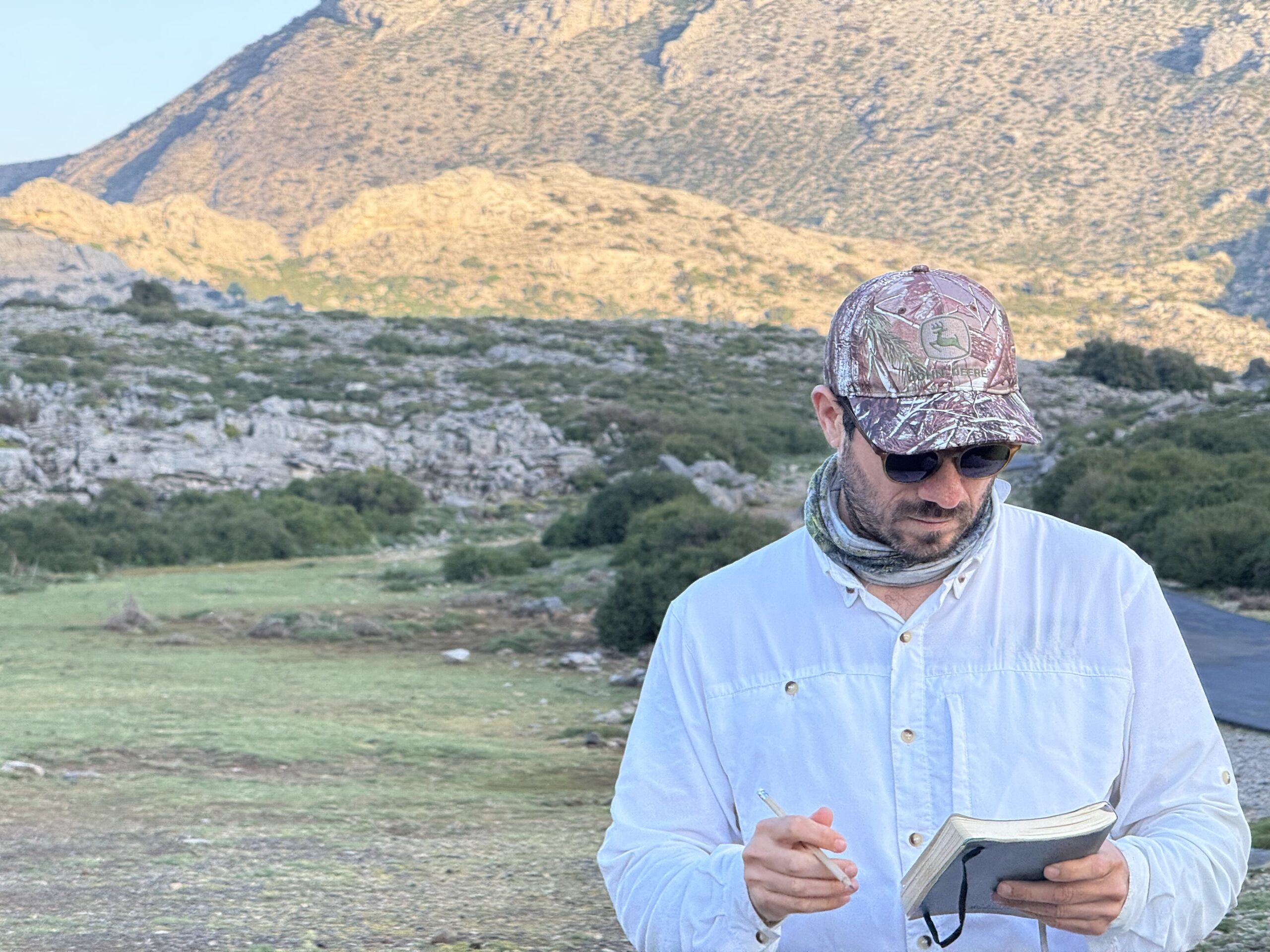
Mineral geometry: The design of the mitata on the Nida Plateau and the textures of Cretan limestone.
The Author Interview: The Secret of Three Centuries
We stepped into the workshop of a local master ceramicist whose family has guarded the trade for generations. The workshop—a space of whitewashed stone walls where the air smells of damp earth and slow-combustion smoke—operates under a principle of absolute material honesty.
When asked about the raw material's origin, the artist stopped the wheel, wiped her slip-covered hands, and unveiled a historic truth:
"Every summer, we ascend to the same ravines on the outskirts of the village, 3 kilometers away, to extract clay from the very same ancient vein that has been exploited for over three centuries. If we study local chronicles and fragments unearthed in neighboring archaeological sites, we have the certainty that these are precisely the same veins from which ancient Minoan potters gathered material to mold the colossal pithoi of the Knossos and Phaistos palaces."
This revelation elevates Margarites ceramics from a decorative object to a tangible bridge into the Bronze Age. The continuity of matter is absolute: the same earth, the same mineral-laden local water, and the same empirical knowledge transmitted entirely without written manuals.
The Technological Sophistication of Minoan Painting
Intellectual fascination peaks when observing the artistic finishing tools. The master artisan showed us the brushes she employs to trace the geometric, marine, and floral motifs that characterize the Neopalatial style.
The brush handles: These are hand-carved exclusively from the residual wood of centenarian olive trees on the family estate, selected for its density and water resistance.
The bristles: No synthetic fibers are used. They are crafted from selected hair of wild mountain goats (Capra aegagrus cretica), which possesses a unique capillary porosity that retains organic iron-oxide paint without dripping, guaranteeing a continuous, fluid, calligraphic stroke on the porous clay before it enters the kiln.
The paints are prepared by grinding stones rich in metallic oxides, diluted in fresh spring water. No chemicals, no modern stabilizers. It is the pure application of ancient organic chemistry on a canvas of living earth.
The Gastronomic Experience of the Lowlands
Following the immersion in the workshop, our thermal and nutritional pause took place in a small family taverna hidden under the shade of wild grapevines a space selected via our quiet luxury protocol for its acoustic isolation from the tourist flow.
The Margarites menu directly mirrors the valley’s agriculture:
The starter: Fresh Mizithra cheese, crafted that very dawn from sheep’s milk grazing on clay-heavy hills, served with a drizzle of wild thyme honey and dusted with tender mountain oregano leaves.
The main dish: Chaniotiko Boureki, a slow-baked pie layering local zucchini, basin potatoes, Galomyzithra cheese, and a subtle hint of fresh mint, wrapped in a crisp artisanal pastry drizzled with first-press olive oil.
The pairing of the cheese’s noble fat with the mint's freshness delivers an immediate glycemic recovery, preparing the body for the drastic altitude shift awaiting in the next leg of the journey.
Chapter II: Mineral sovereignty (The Psiloritis massif and the nida plateau)
The Alpine Ascent and Thermal Transition Protocols
Leaving the clay warmth of Margarites behind, the Nissan began its climb toward the geological heart of the island: Mount Ida (Psiloritis). The vehicular transition is severe; in less than 45 minutes, the vehicle climbs past 1,400 meters in altitude. This shift in atmospheric pressure and temperature triggers the automatic activation of our biological comfort management protocols.
To guarantee an experience of absolute protection, the vehicle's cabin is equipped with high-durability, commercial-grade polyurethane-injected coolers by YETI, in a matte Charcoal Grey finish aligned with our aesthetic. Within these airtight containers, directly on a bed of solid ice, rest double-wall stainless steel Hydro Flask chalices, filled with high-purity mineral water kept at a constant 15°C to preserve its organoleptic properties without numbing the taste buds.
Alongside the flasks are premium transition thermal towels crafted from pure linen with a waffle weave by the textile house LinenMe. These pieces, noble and organic to the touch, are pre-moistened with a fine distillation of mint and wild lavender essential oils. Upon stepping out of the car into the high mountains, applying these ice-cold towels to the wrists and neck provides instant thermal relief, balancing the nervous system against the biting wind and intense alpine UV radiation of the Cretan interior.
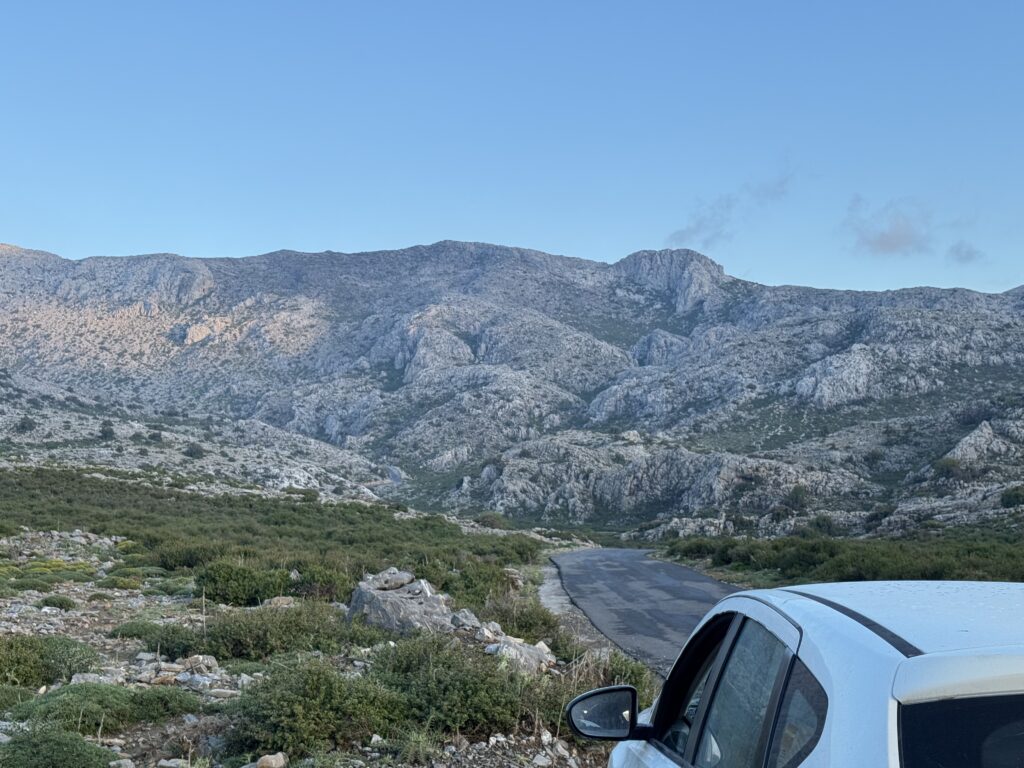
Architecture of isolation: Pure lines, ancestral mitata, and sweeping horizons on the Psiloritis Massif.
The Architecture of Silence: The Dry-Stone Mitata
Upon entering the colossal expanse of the Nida Plateau, the landscape strips away all ornamental concessions. It is the realm of naked limestone, a pale grey environment that glares under the zenith sun. In this sovereign void, GRECIAQUÍ's authorial gaze fixes upon the only structures challenging the relief's scale: the mitata.
These circular constructions, direct heirs to Minoan tholos building techniques, are vaulted huts raised entirely via the dry-stone method—meaning without a single drop of cement, mortar, or mud to bind the blocks.
Our architectural field audit reveals a striking mathematical order:
The base: Massive, heavy calcareous stones anchor the structure directly to the bedrock to withstand the lateral thrusts of winter snow.
The dome: Concentric rows of thinner stone slabs gradually overlap inward at a precise angle of inclination, calculated empirically so that gravity mechanically locks each piece into place. The final stone, the central keystone, closes the pressure circuit.
The mitato is the sophistication of simplicity pushed to its evolutionary extreme. It is a porous, breathing structure, allowing smoke from the internal fire to escape through the limestone micro-fissures while remaining hermetically sealed against torrential rain or Psiloritis blizzards. A masterpiece of gravitational physics that stands eye-to-eye with the severity of the mineral landscape.
The Ethnographic Connection: Mountain Pastoral Life
We had the privilege of sharing the day with a local shepherd from the Anogeia community, a man with hands weathered by mountain winds and a serene gaze, representing the fifth generation of his family dedicated to transhumant pastoralism in Nida.
He explained that the daily routine on the plateau has remained unchanged for a millennium. The sheep and goats feed exclusively on the short grasses and xerophilic aromatic herbs growing above 1,500 meters, which imbues their milk with an acidity and fat concentration absent in the lower valleys. The shepherd crafts his own cheeses inside the mitato, using hand-woven baskets made from wild riverbed reeds as molds. This direct, staging-free human interaction is the essence of the proprietary travel insight we document for our clients: a real encounter with a culture that measures time by seasonal cycles rather than digital clocks.
Ancient High-Mountain Gastronomy: The Ofgisto
The culinary experience in the heights of Nida is an exercise in radical minimalism and caloric power. There are no induction cooktops or avant-garde techniques; everything is resolved with wood fires of thyme and mountain oak.
We witnessed and partook in the preparation of the definitive dish of the Cretan highlands: Antikristo (locally termed Ofgisto).
The technique: Quarters of suckling lamb are cut and skewered onto olive wood stakes. These stakes are arranged in a concentric circle around a central fire, but at a distance calculated so the meat receives thermal radiation from the embers and the plateau wind rather than direct flame.
The timing: The lamb roasts slowly for over four hours. During this process, the exterior fat gradually melts away, basting the internal muscle fibers and creating an extraordinarily crispy outer crust, seasoned solely with coarse sea salt crystals harvested from the rocks of the southern coast.
Eating Ofgisto at the entrance of a mitato, breaking the meat with your hands as the air chills rapidly at 17:30, is an experience of brutal, primitive honesty. The flavor is intensely mineral, with smoky notes from noble woods and the herbal background of the wild thyme the animal grazed on. A Stoic banquet of gastronomic value unattainable for any Michelin-starred restaurant on the urban coast.
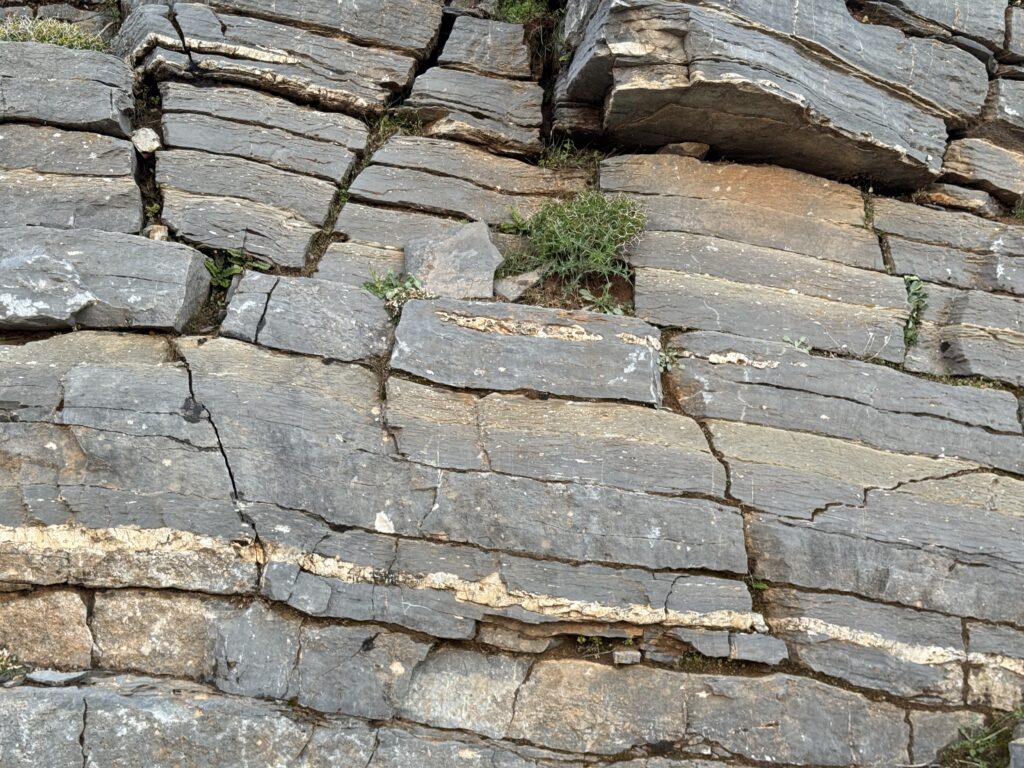
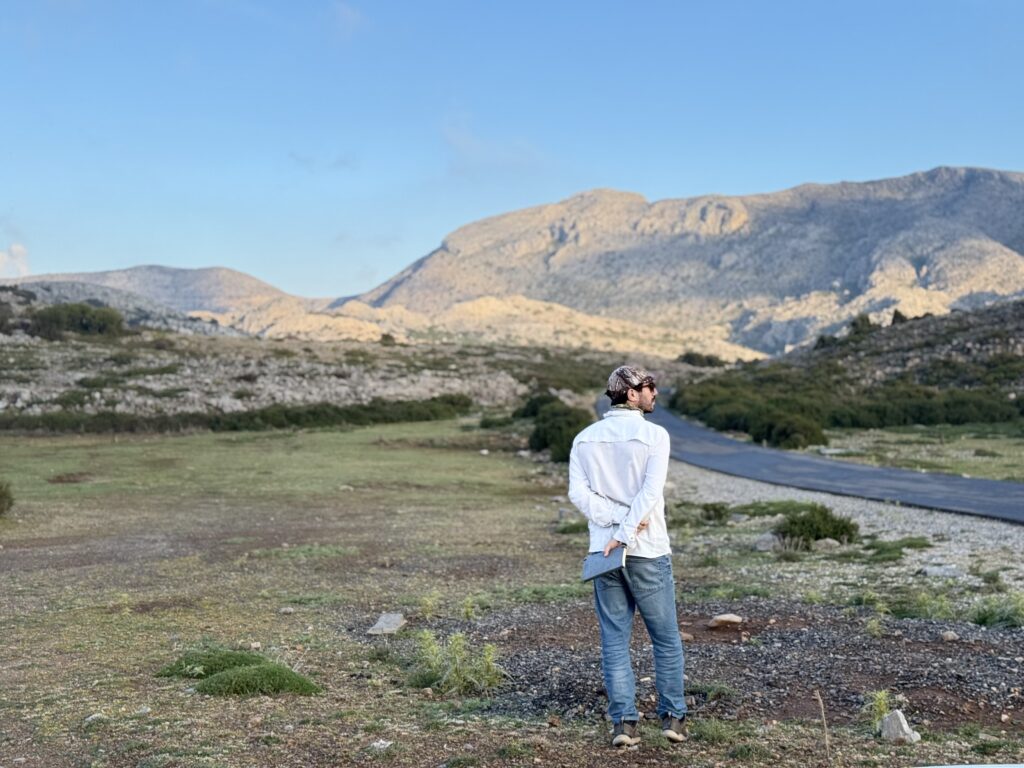
Kairos textures: Raking lateral light across limestone and the cave's mineral profile.
Chapter III: The Pulso of the deep subsoil (sacred engineering)
The Ideon Andron Cave and Mythic Geology
The final axis of our physical and conceptual exploration led us to the monumental entrance of the Ideon Andron Cave, located on the western flank of the plateau. To an ordinary observer, this is the mythological site where the goddess Rhea hid the newborn Zeus to protect him from Cronus. To GRECIAQUÍ's eye, it is a masterclass in karstic geology and ancient environmental engineering.
Crossing the cave's threshold, the plateau's exterior temperature drops sharply from 14 °C to a stable 6 °C within the grand subterranean hall. This thermal stability allowed ancient peoples to use the cave not only as a pan-Hellenic ritual center of high importance but also as a strategic resource depot. Relative humidity hovers around 95%, causing a steady distillation of water filtered through hundreds of meters of overlying compact limestone layers. The stalactites and stalagmites decorating the gloom are not geological ornaments; they are natural load-bearing columns that have guaranteed the vault's structural stability through the constant seismic movements characterizing the Hellenic arc.
Infrastructure Analysis and Modern Logistical Parallels
This immersion into the natural engineering of Ideon Andron's deep subsoil connects directly with our field audits of the island's civil works, specifically at the new Kastelli airport axis. Our technical analysis consistently draws parallels between how ancient civilizations mastered earth pressure and subterranean water management, and how modern engineering executes the consolidation of runways, service tunnels, and high-voltage power grids in the Cretan subsoil today.
Understanding the island's inner workings—from its sacred caves to its vanguard contemporary infrastructures—is what enables us to design flawless vehicular contingency plans, selecting alternative routes shielded from any geological surprises or heavy traffic, ensuring our clients' journeys flow with the precision of Swiss clockwork.
Technical safety and logistics note (GRECIAQUÍ standard)
Route planning in extreme mineral environments demands strict fatigue control and thermal management protocols. For our clients, travel through the interior of Crete operates under a corporate rule of technical stops every 90 minutes to mitigate wear from zenith UV radiation.
Cabin cooling is executed via prior dynamic evacuation, maintaining a thermal gradient of no more than 7°C relative to the outside to prevent biological shock. Hydration is managed exclusively through double-wall steel flasks preserving water's mineral purity at 15°C, accompanied by organic linen towels textured in a waffle pattern, moistened with wild lavender essence for a refined thermal transition following field walks.
Conclusion: The return to the axis of trust
As we begin our vehicular descent from the high ridges of Psiloritis toward the northern coast, with the Hydro Flasks still preserving fresh water and voice notes logged on the iPhone in 48-megapixel ProRAW format, we consolidate a certainty: authentic Crete reveals itself only to those with the patience to audit its matter. From the Margarites clay molded with goat-hair brushes to the meat roasted by fire radiation in the mitata, every element forms part of an ecosystem of high culture that we jealously safeguard at our firm.
This Journal stands as empirical testimony to our firsthand knowledge. We do not sell destinations; we manage the safety, sophistication, and cultural revelation of a territory we master down to its finest geological and human details. Today's field notebook is closed, but the semantic cartography of GRECIAQUÍ continues to expand.